
Project Brief:
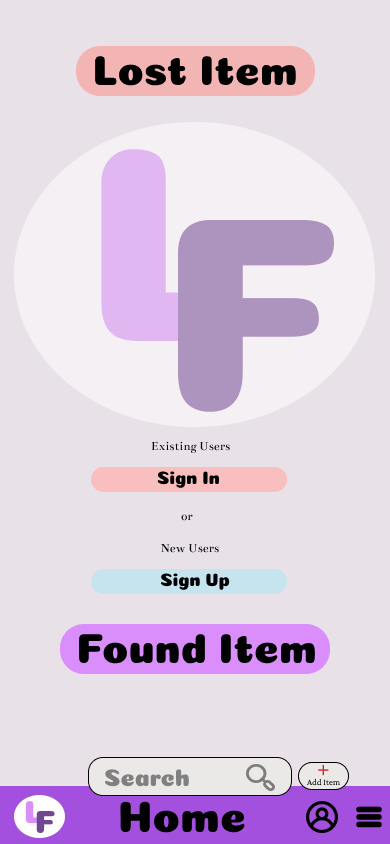
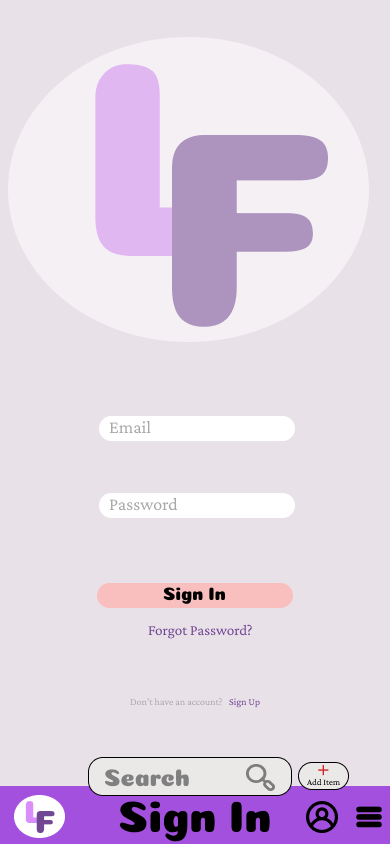
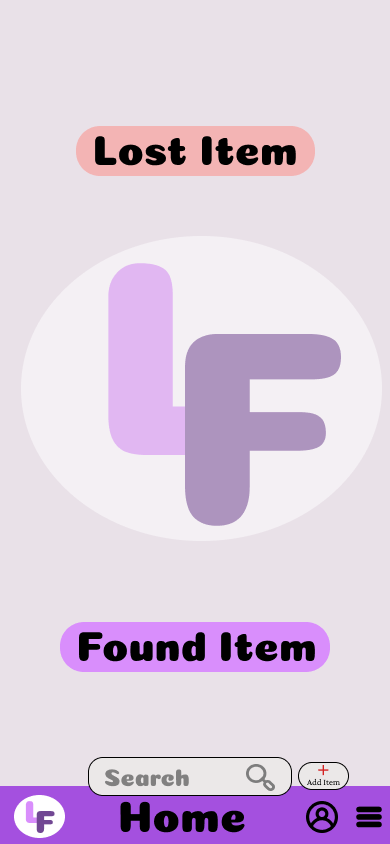
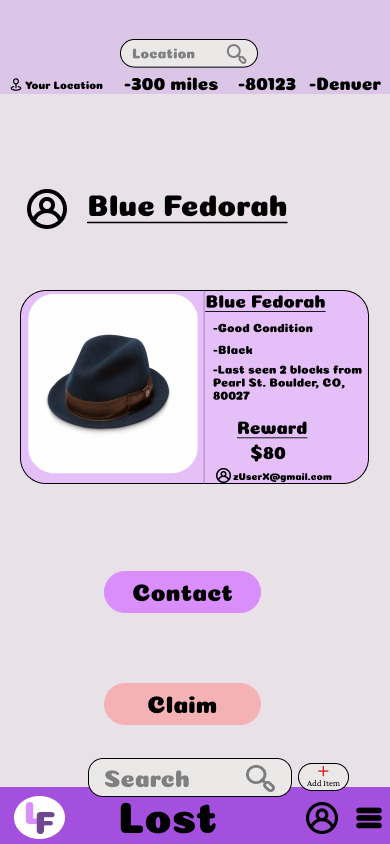
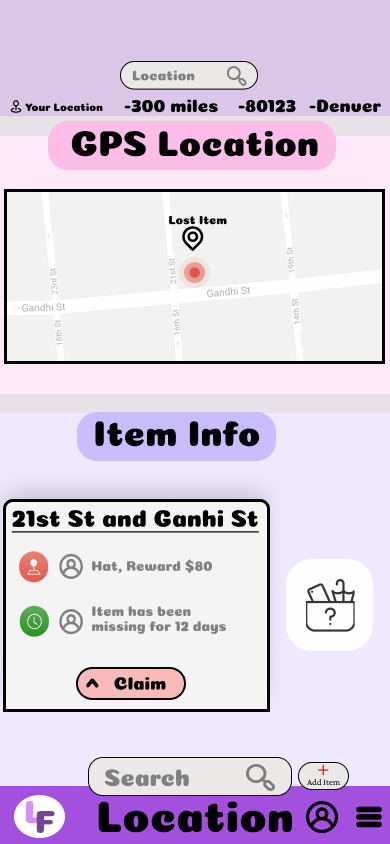
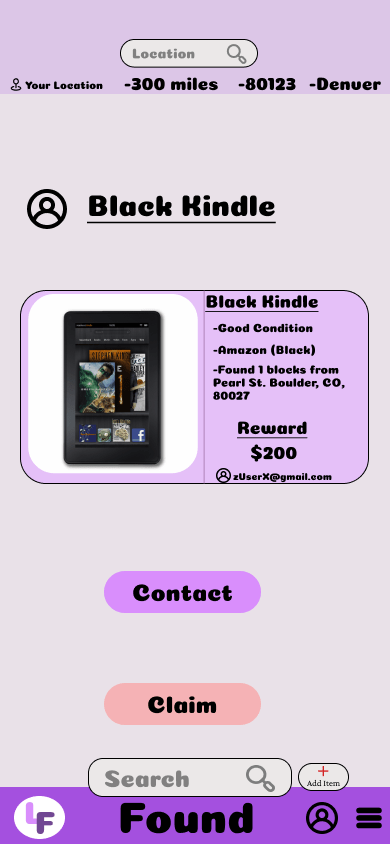
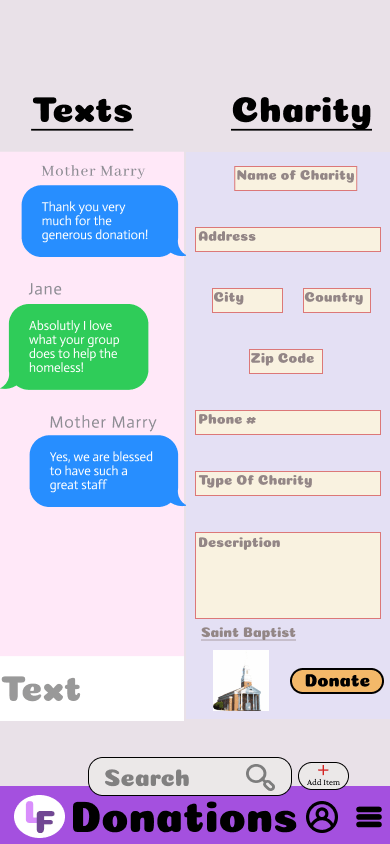
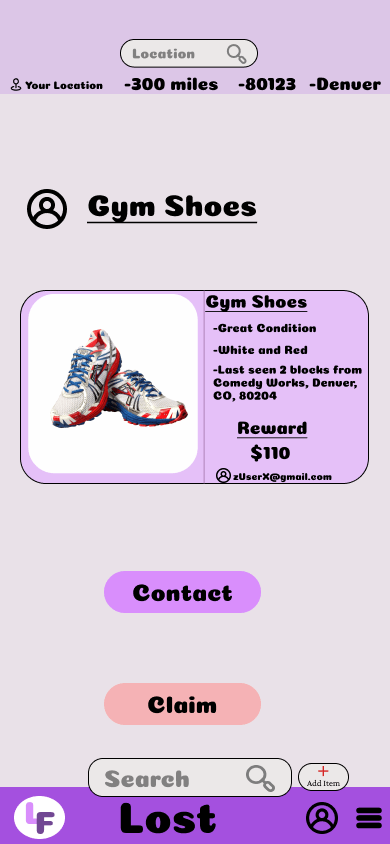
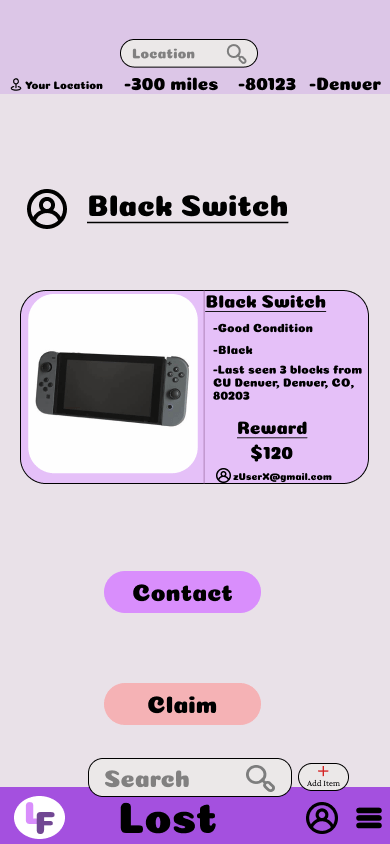
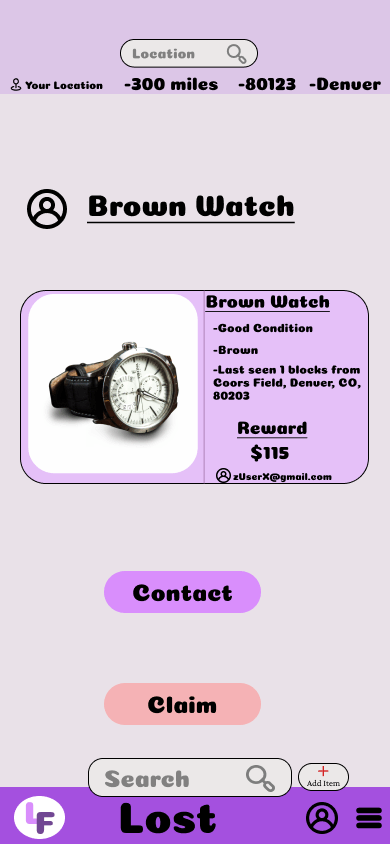
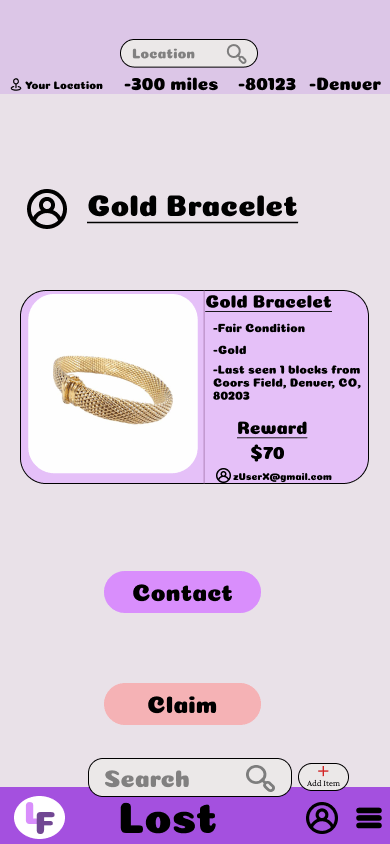
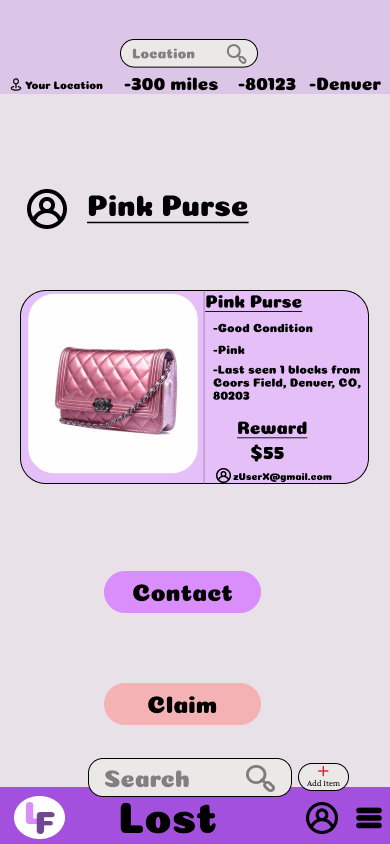
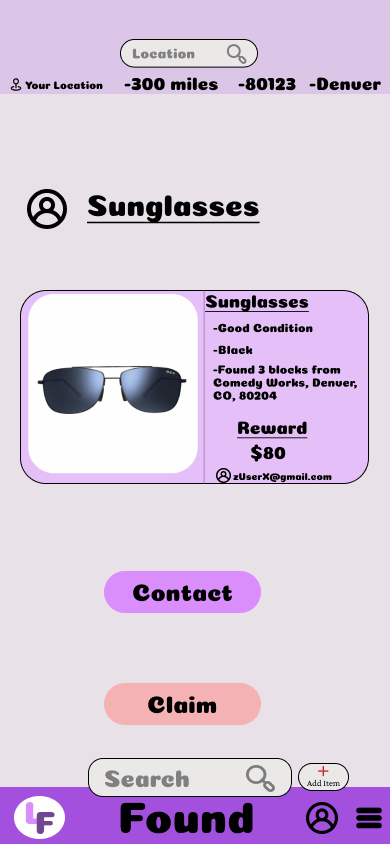
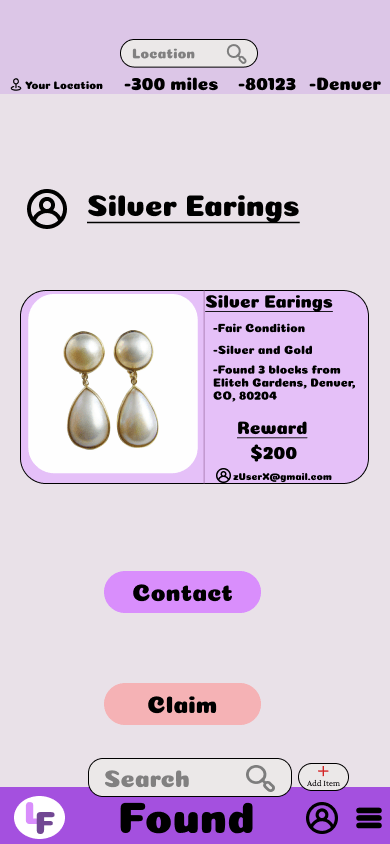
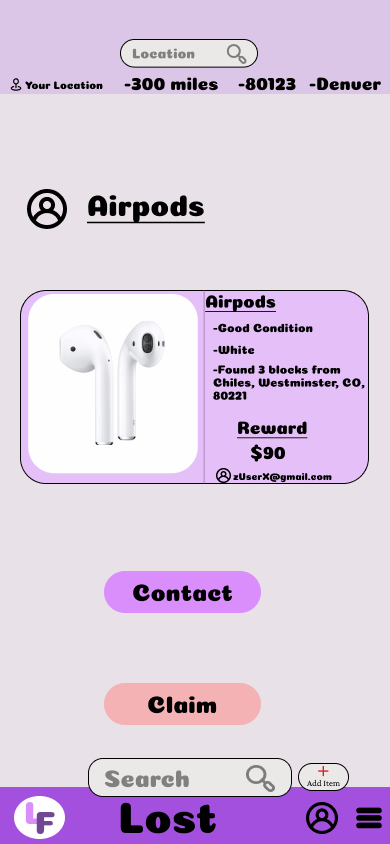
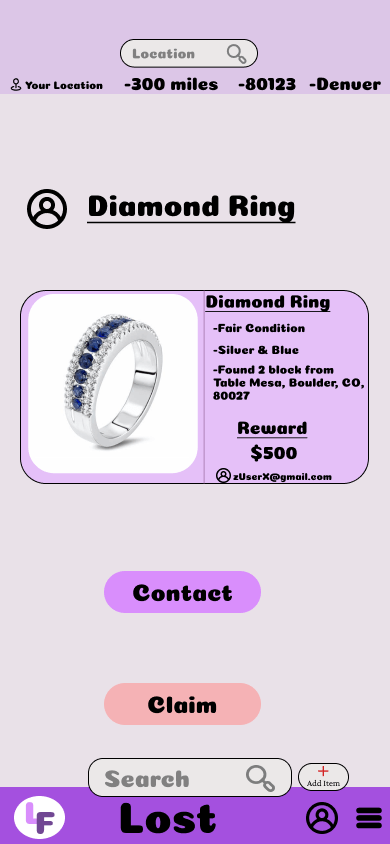
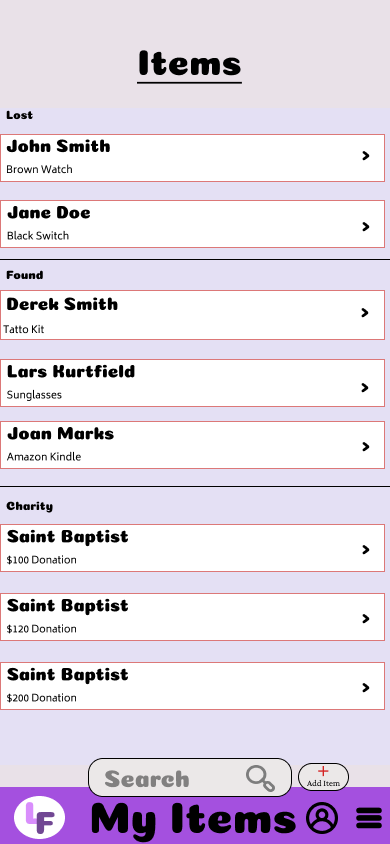
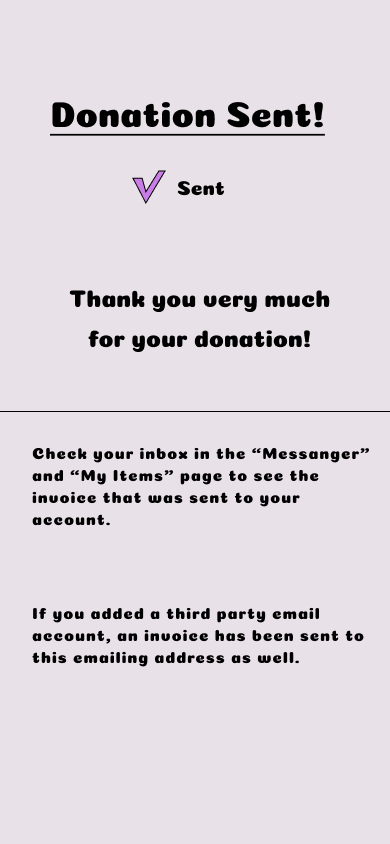
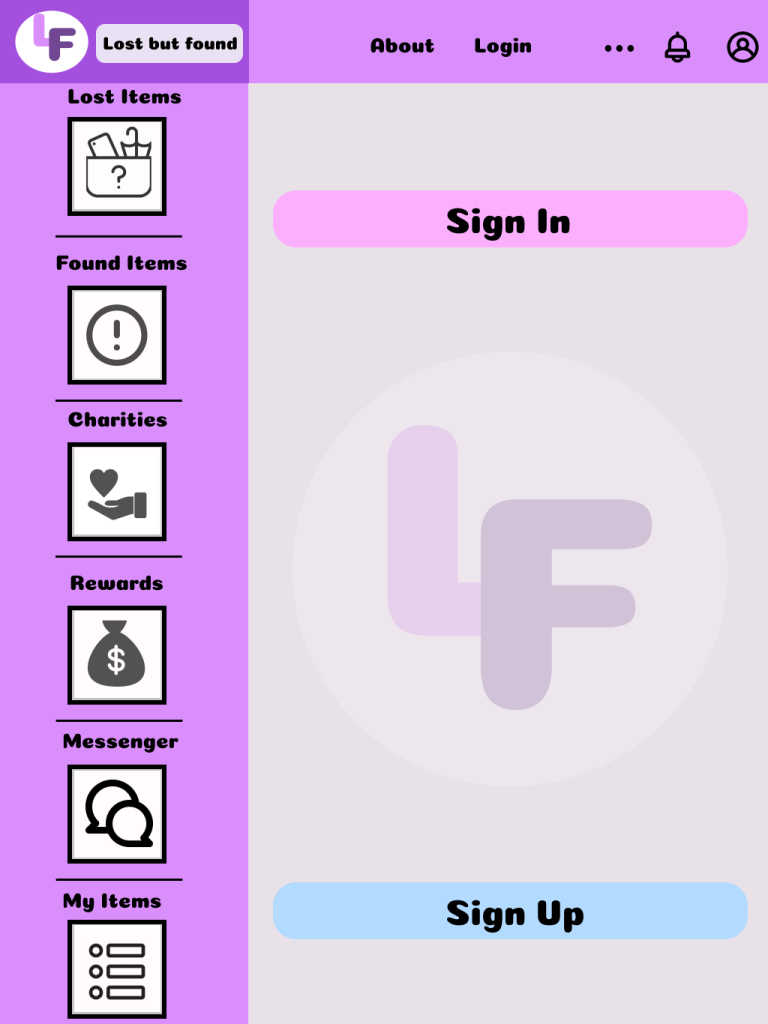
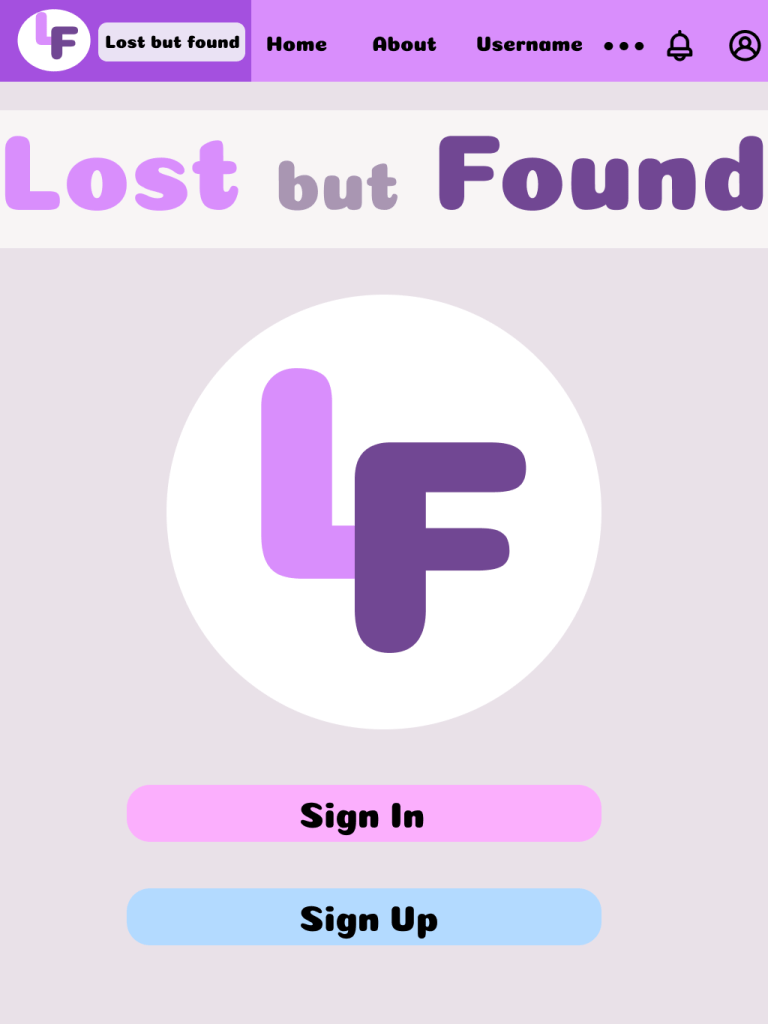
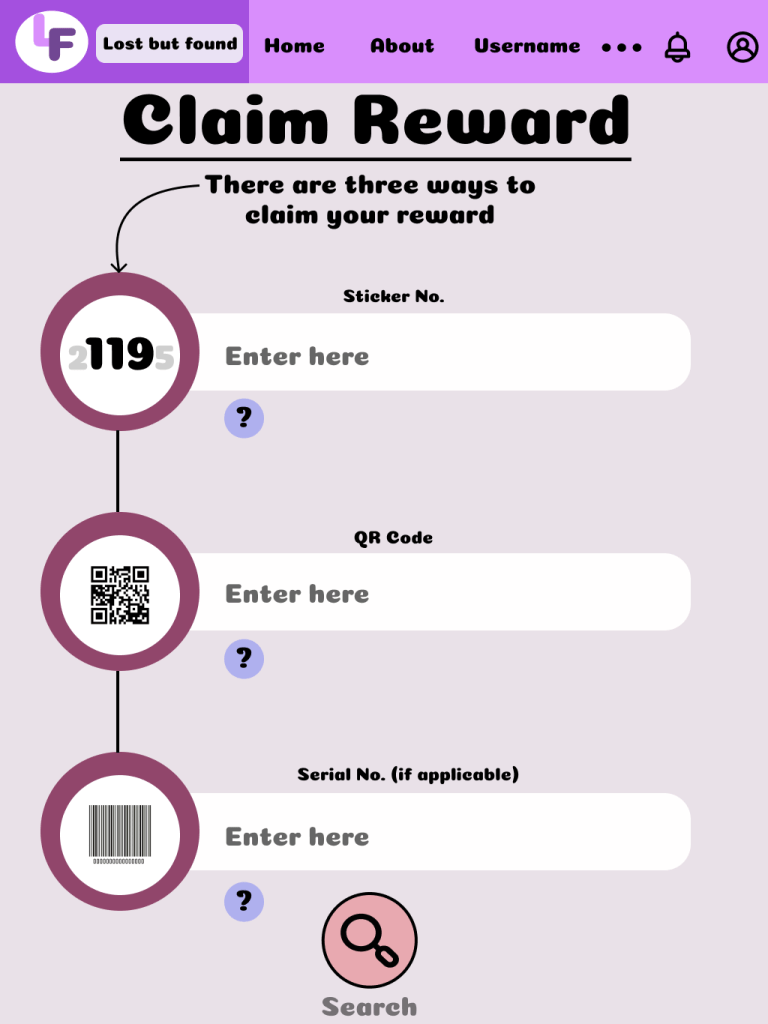
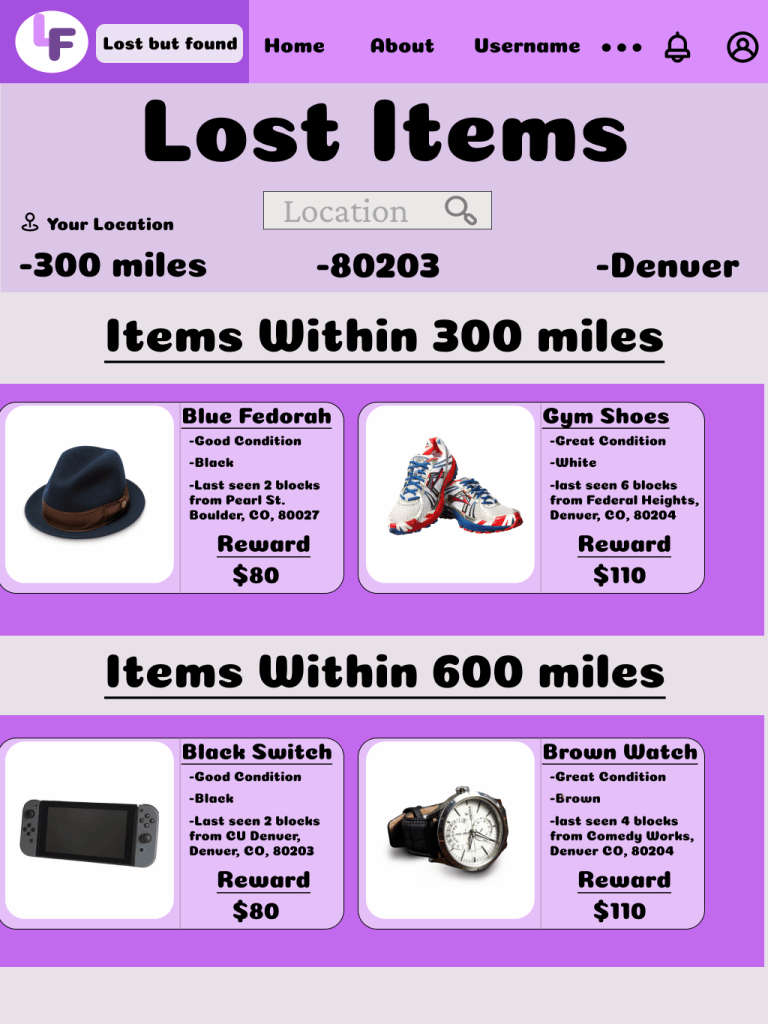
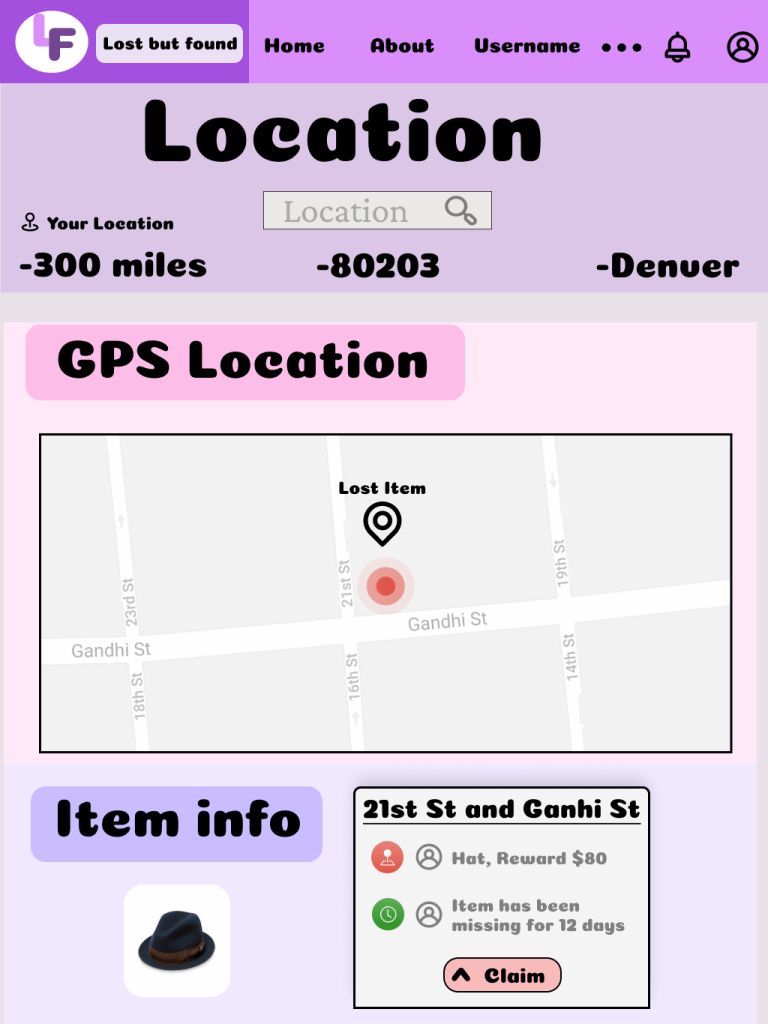
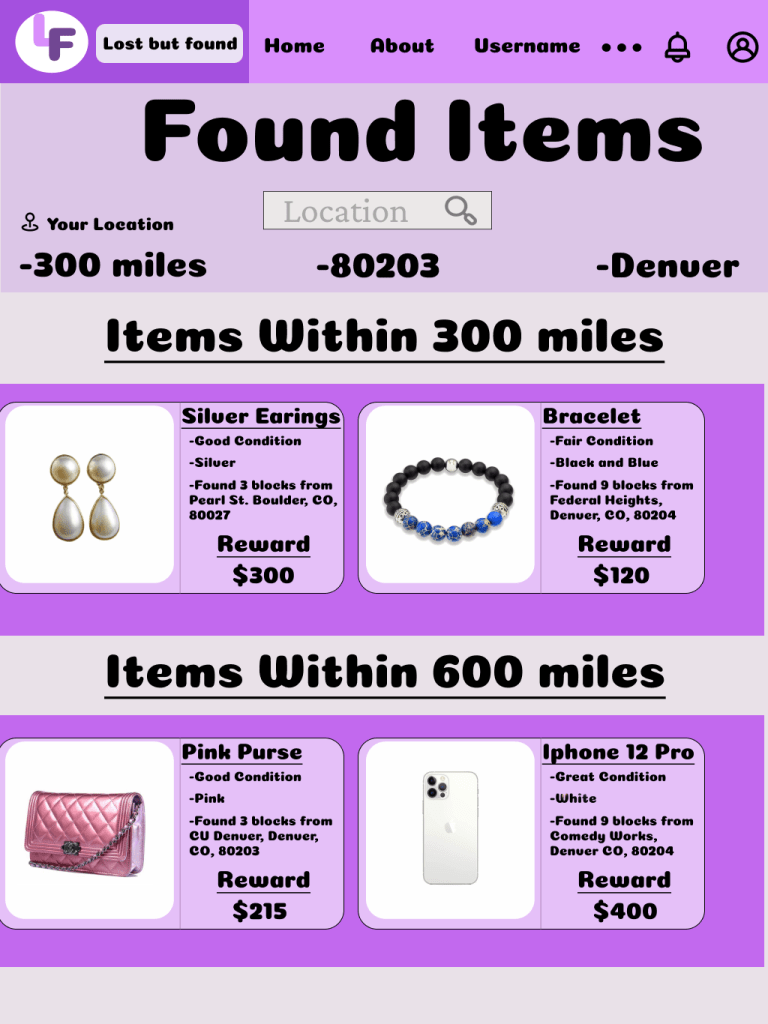
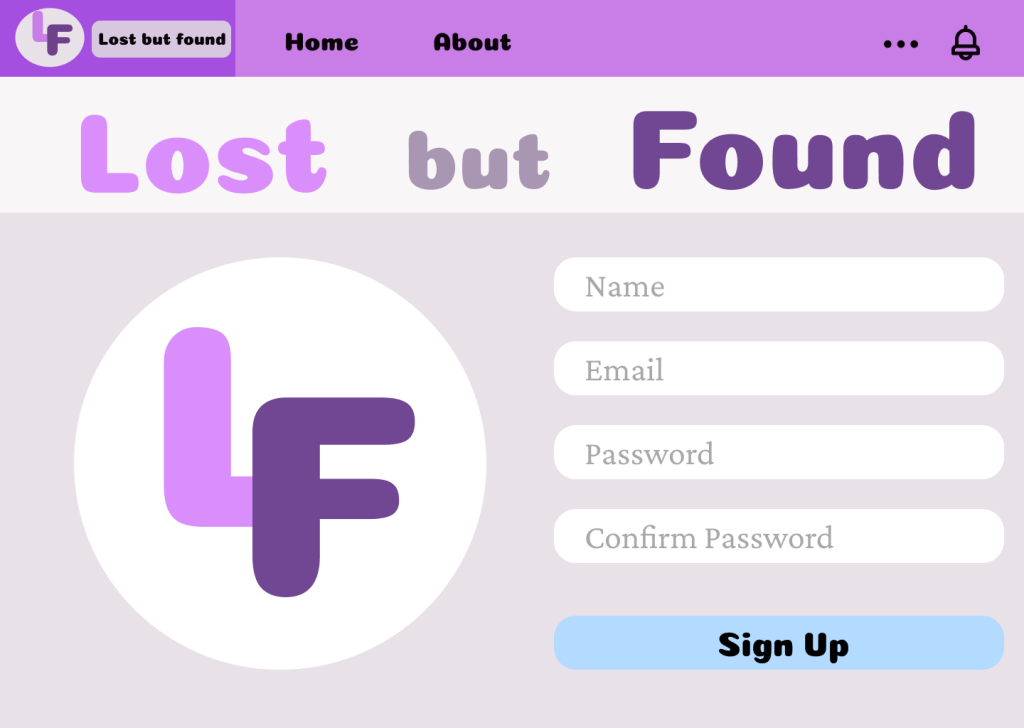
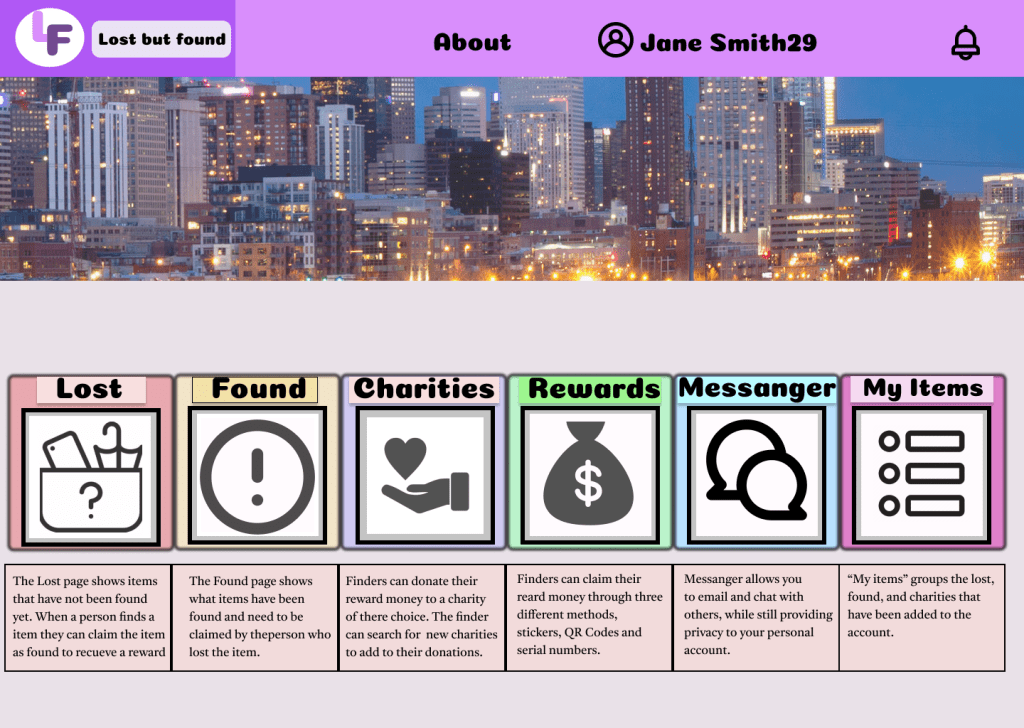
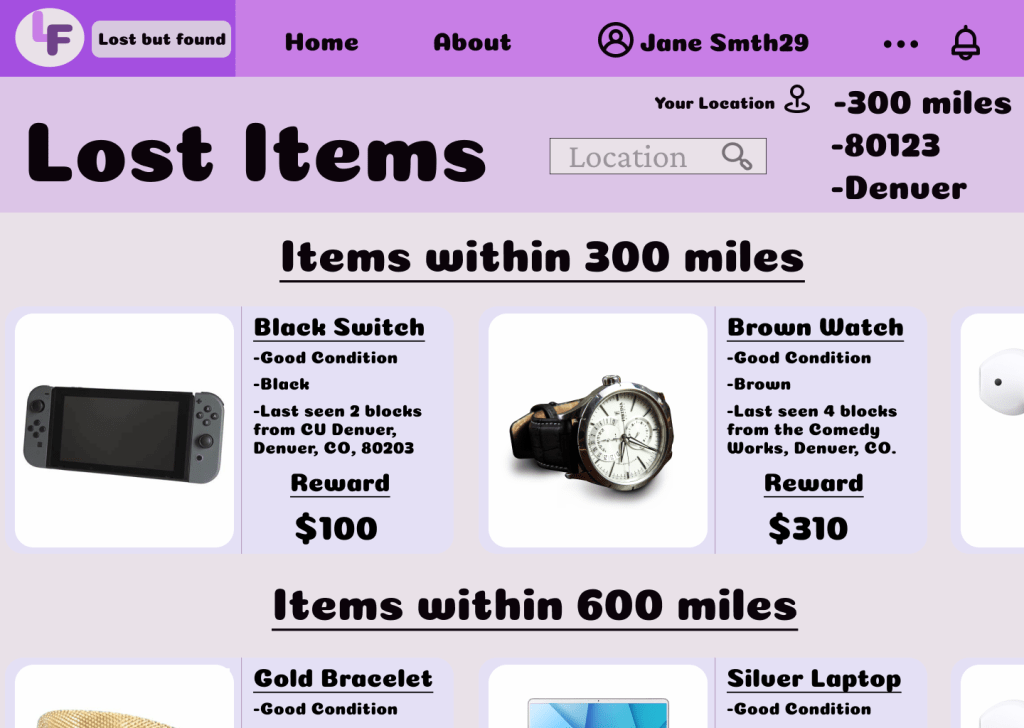
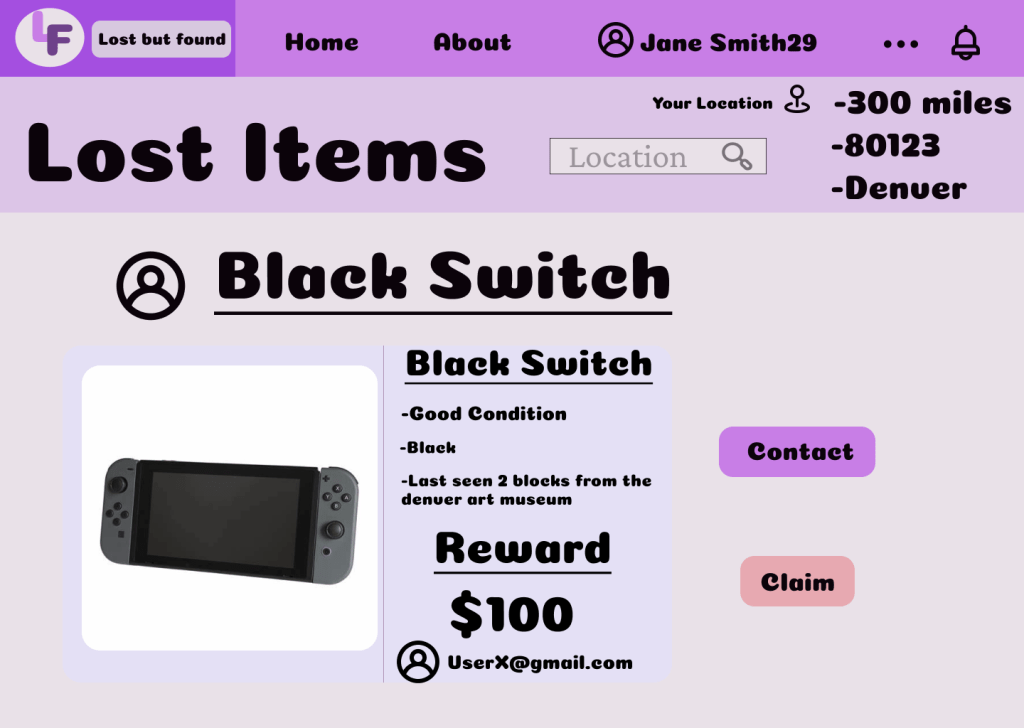
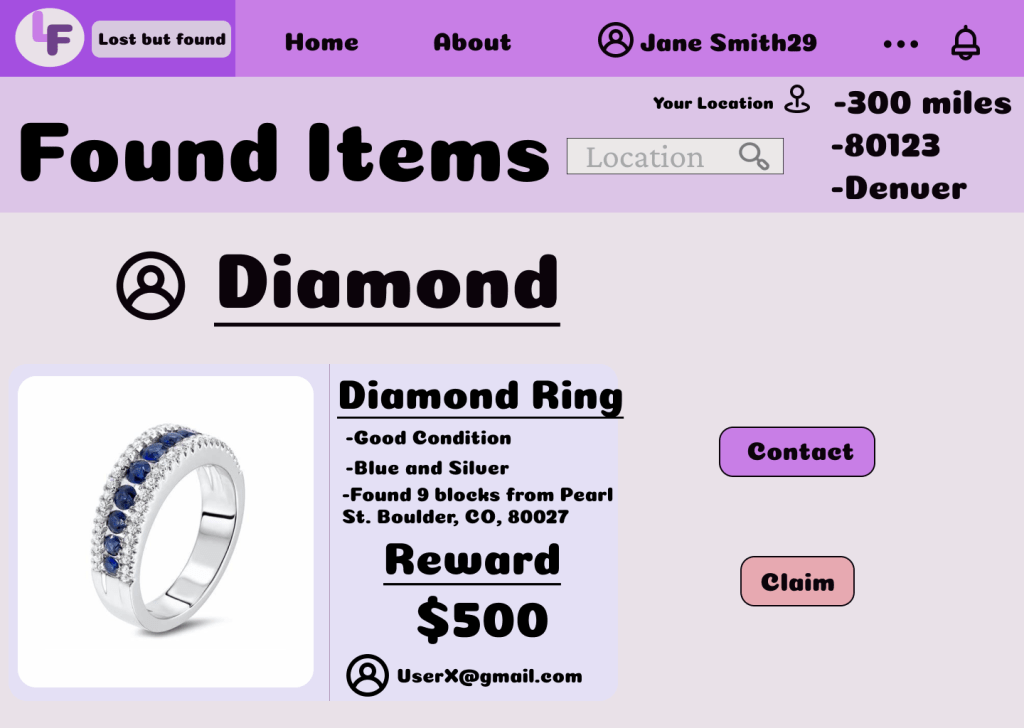
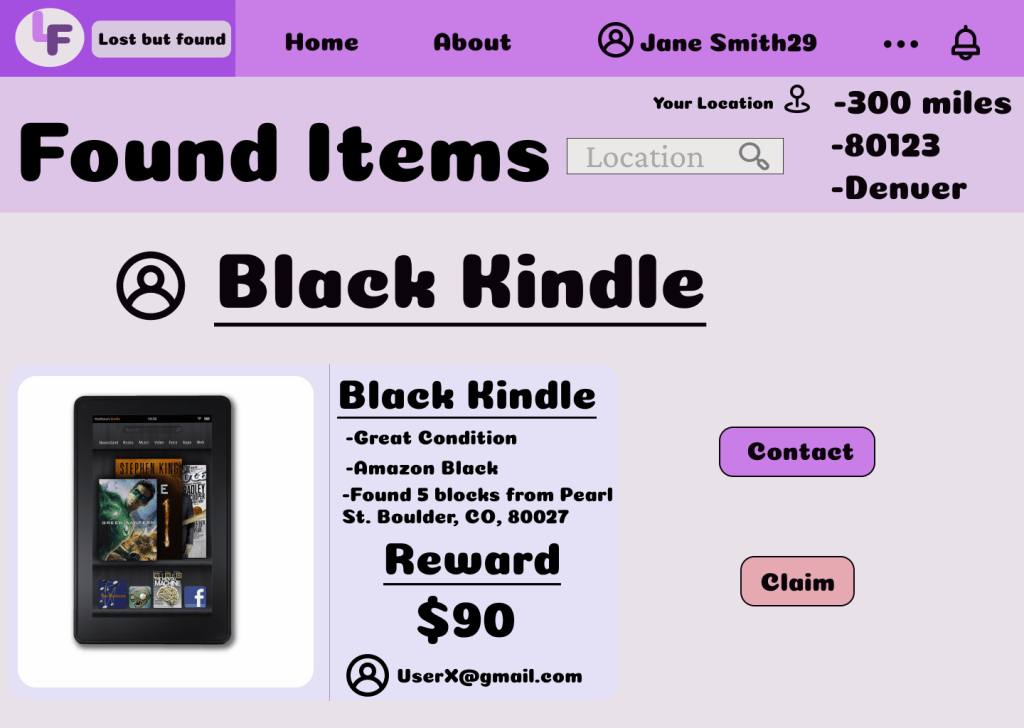
The assignment required the class to create an application that works across multiple platforms created for mobile, tablet and desktop. Students were to create prototypes of the responsive application using the software Figma. The application needed to share a similar structure and format across all three platforms, keeping the brand identity and essence of the app across all three of these devices.
Project Proposal
Humans tend to forget things; our minds recollection is prone to interference, which leads us to forget certain ideas or objects (Shaw, 2016). This is why we have lost and founds in so many of our institutions and business throughout the country. It is estimated that the average person loses 9 items every day, which is nearly 3,300 items per year (John, 2021). Certain city such as Denver’s lost and found locations, destroy or donate any lost and found items that are not retrieved after seven days (RTD, 2022). This could mean that the laptop that you left on the bus or your smartphone that you forgot on the treadmill at your local rec center could be destroyed if you do not claim purchase. Because of human’s forgetful nature, there should be an easier way to track ones lost items and an easy way to claim purchase of said items. That is why I am proposing of an application that lets any individual that has lost an item that has been found at a lost and found location, to easily track where the item was found and claim purchase of the item over the application. Losing an item that one cares about can cause a lot of anxiety and stress, that is why there should be an easy way to reclaim and track one’s item in an effective and quick manner from said lost and founds location.
Approach
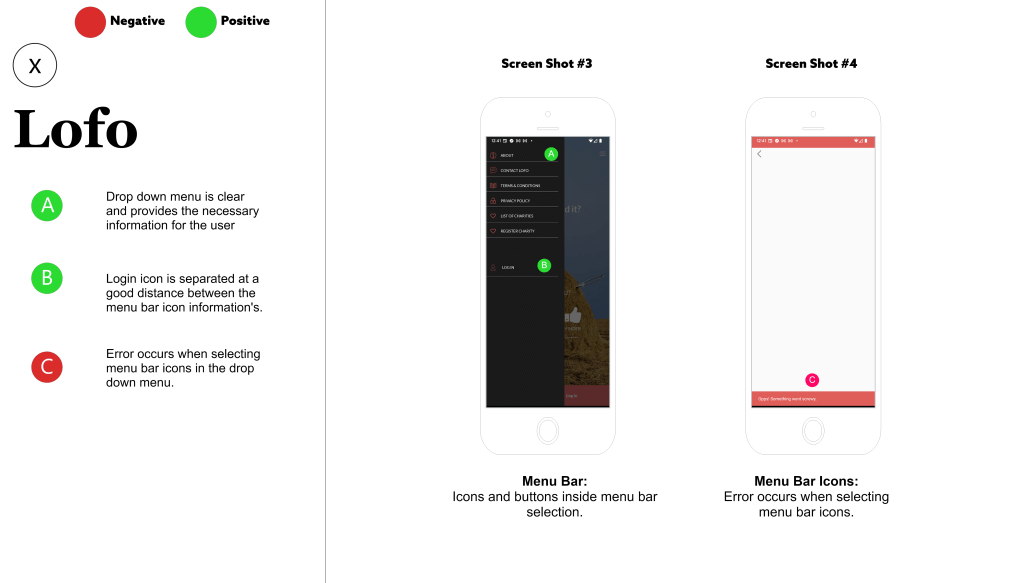
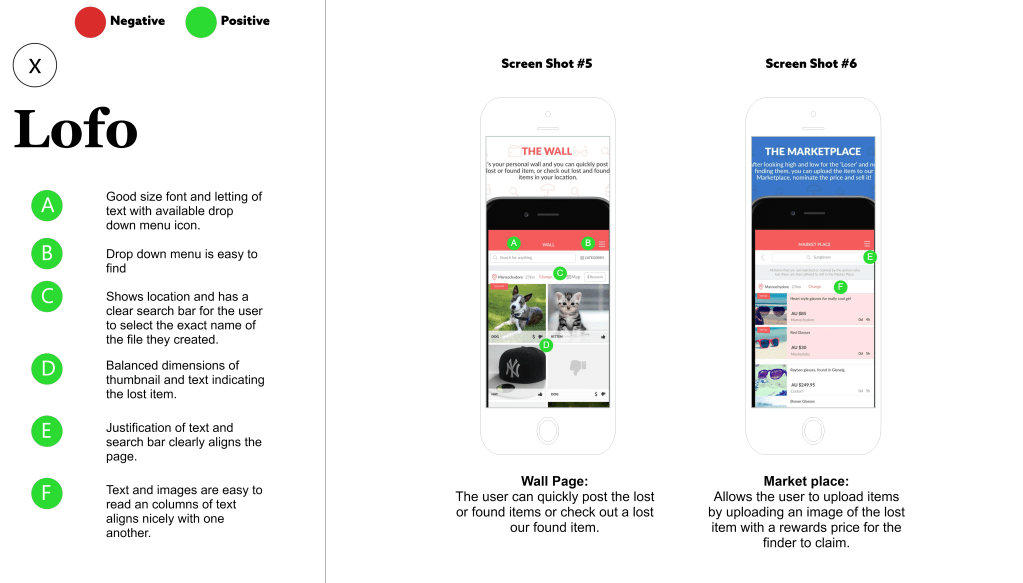
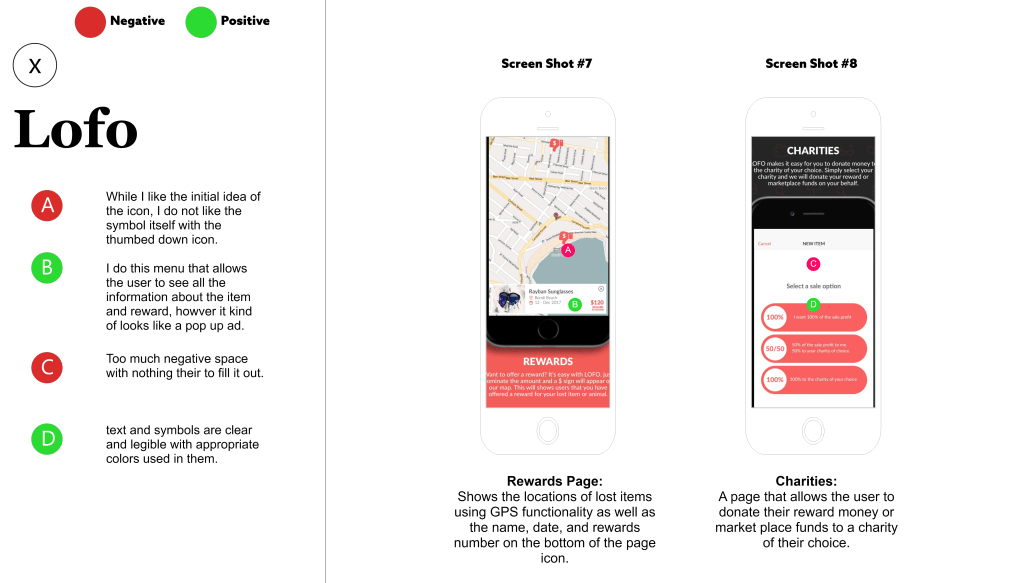
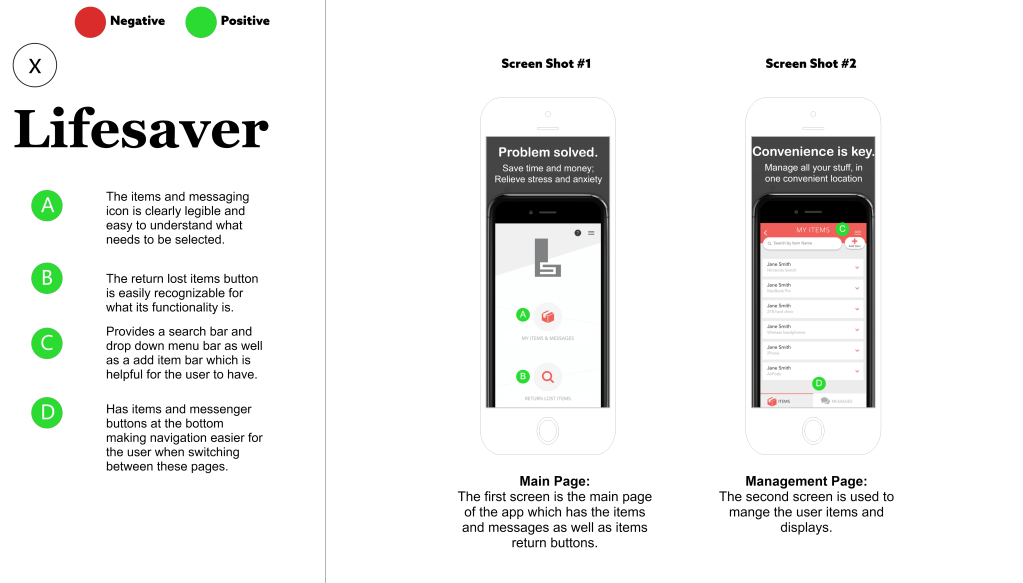
The approach that I took on this project was first creating a competitive analysis, where I compared my ideas to other applications that were similar to mine that were a part of a community established program. I created the pros and cons of each of the applications with the similar idea of mine, so that I could create a easy and fluid experience for my attended users. I then created a flow chart using the application “Axure” that is used for mock ups and creating prototypes for applications. From this I laid out the pages, screens and buttons that would be used for each individual page and how they would interact with one another. Using this data I created a couple of sample mock ups that I shared with the class using the software Figma. I then used the class’s critiques to work on the areas that needed more development and kept the ones that worked out in an user friendly way. I then created a slide deck of the static images that I shared with the teacher. Using the teachers feedback, I began to work on the interactive porotype, showcasing how the applications features and designs. I then shared the porotype with individuals od different ages and genders, in order to get their feedback on their experience when using the app. I then redesigns some parts of the application using the comments that I obtained from the field test. Now I believe the prototype is at a state where is ready to be used by my intended users.
Design Research
Vision Statement: Lost but Found is dedicated to helping individuals that have lost an item that has been found by a lost and found location, to quickly and easily track their lost item and prove purchase of said item over the application. LF works hand in hand with lost and found location over the US and is dedicated to help individuals find the lost and found location that has found their item. The goal of the application is to help track and reclaim items to their found user in an effective and quick manner.
Circumstance of Use
Who: individuals 18 and over who can legally prove their identity with a drivers license or sate ID.
What: Tacking location of lost and found items and claiming proof of identity for said item.
When: Individuals who have lost and item that has been found by a lost and found location.
Where: Online on any android and apple app store. Can also be found in lost and found locations.
Why: To help individuals claim and locate there found item in a quick and easy manner.
Design Criteria
Easy to use interface: The design of the app is attended to be excisable in a way that makes it easy and quick for the user to find the location of their lost item and to quickly prove their identity with either a driver license or state ID.
Adaptive interface: The app is designed to be on multiple platforms, making it so that the user can use the app on the go if they are using different multiple devices.
Space: The app design is intended to be clean and legible with enough space for the user to clearly identify their lost and found location and to easy showcase their proof of identity.
Success metrics
Increase
-Traffic: The more people that become aware of the lost and found app will in return let others about the app leading to more traffic of the application.
-Items found: The app is intended to help the user find the location of their lost item and in return have the success of having more individuals reclaim their lost items before they are destroyed after a certain period of time.
Sense of Relief: The purpose of the app is to create a sense of relief to the user by showcasing where their item is and that is safe and sound but only for a set time if not reclaimed.
Decrease
-Stress/anxiety: the app is intended to reduce the amount of stress and anxiety that the user might be experiencing due to their lost item. The design of the app is intended to be easily navigated and to quickly pull of the lost and found location that the item was found.
-Confusion: The tracking system of the app is intended to help with confusion of where the lost item was found and to clearly direct the user to the lost and found facility as well as reclaim the lost item by providing their proof of identify through the apps interface.
-Frustration: The user might experience a sense of frustration having to relocate where there have misplaced their item and the app is designed to help with this anger by providing detail information of the items location facility as well as reclaiming the lost item through the apps interface.
Competitive Research



Flowchart

Mobile Designs












Tablet Designs


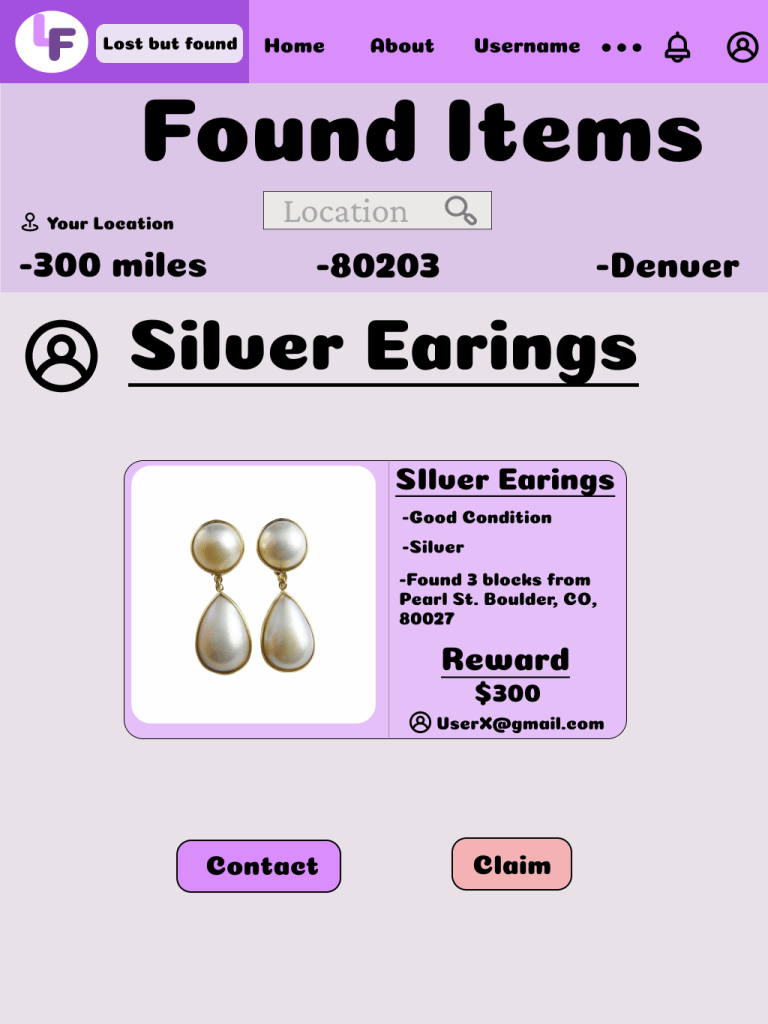

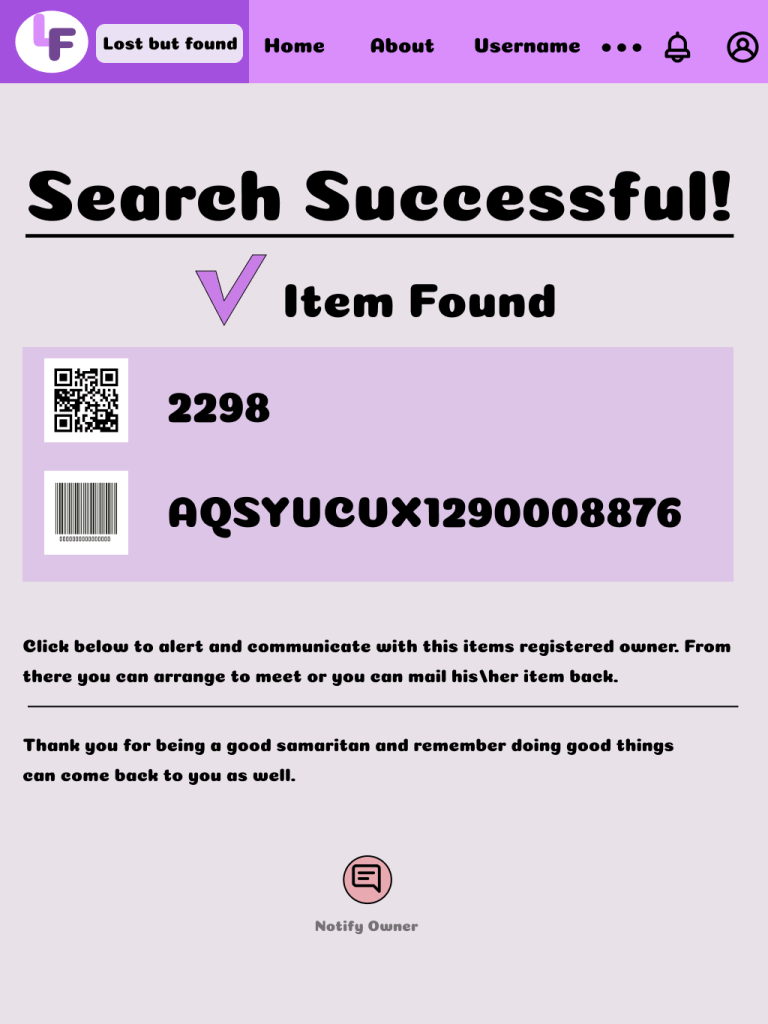


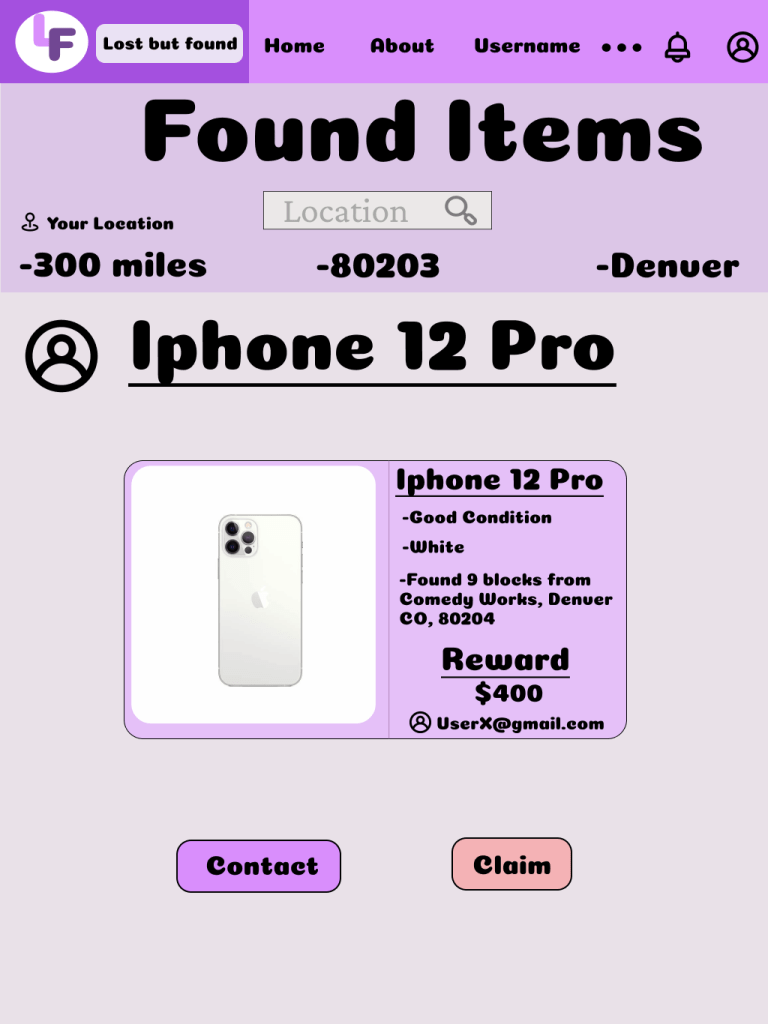
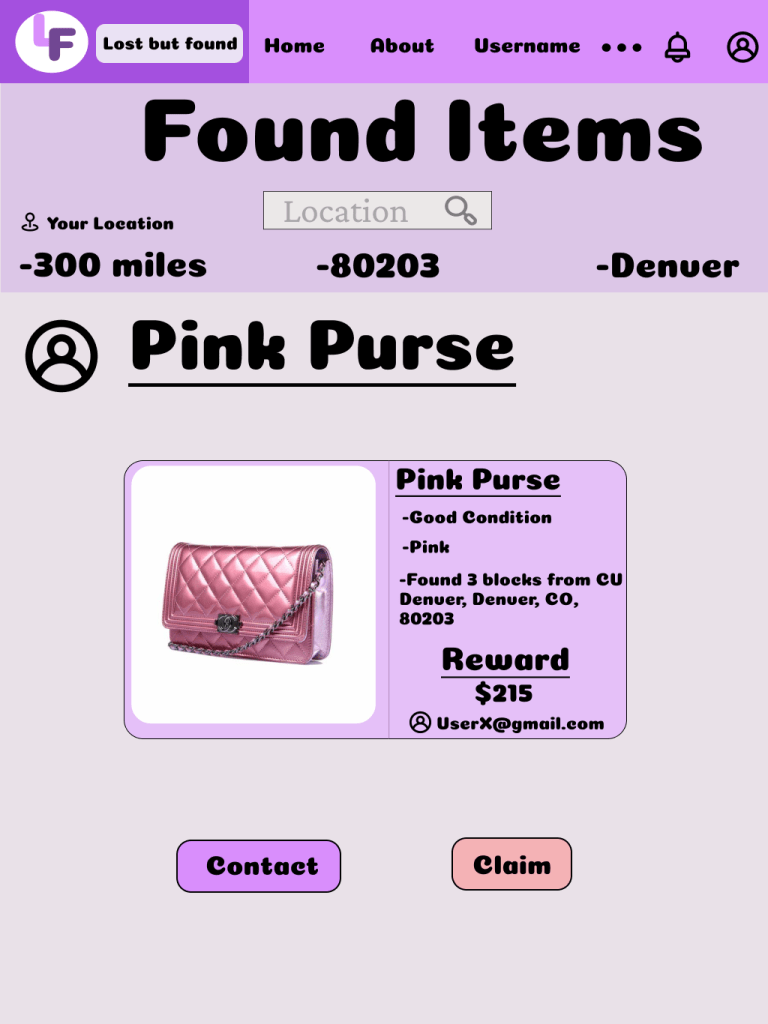

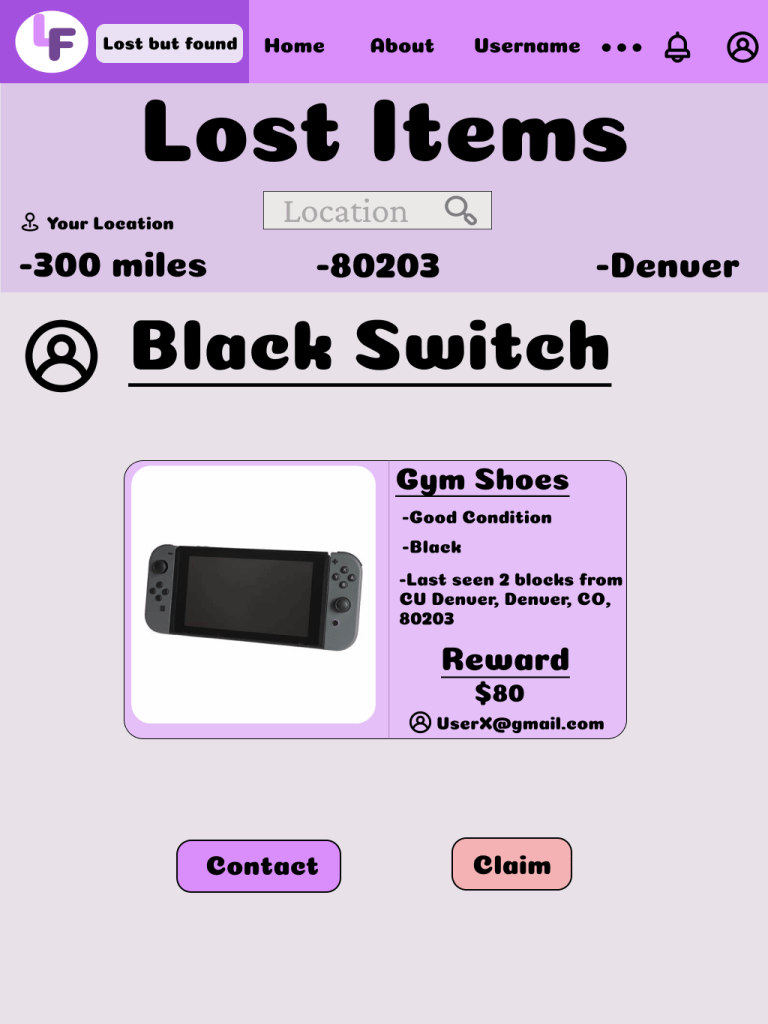
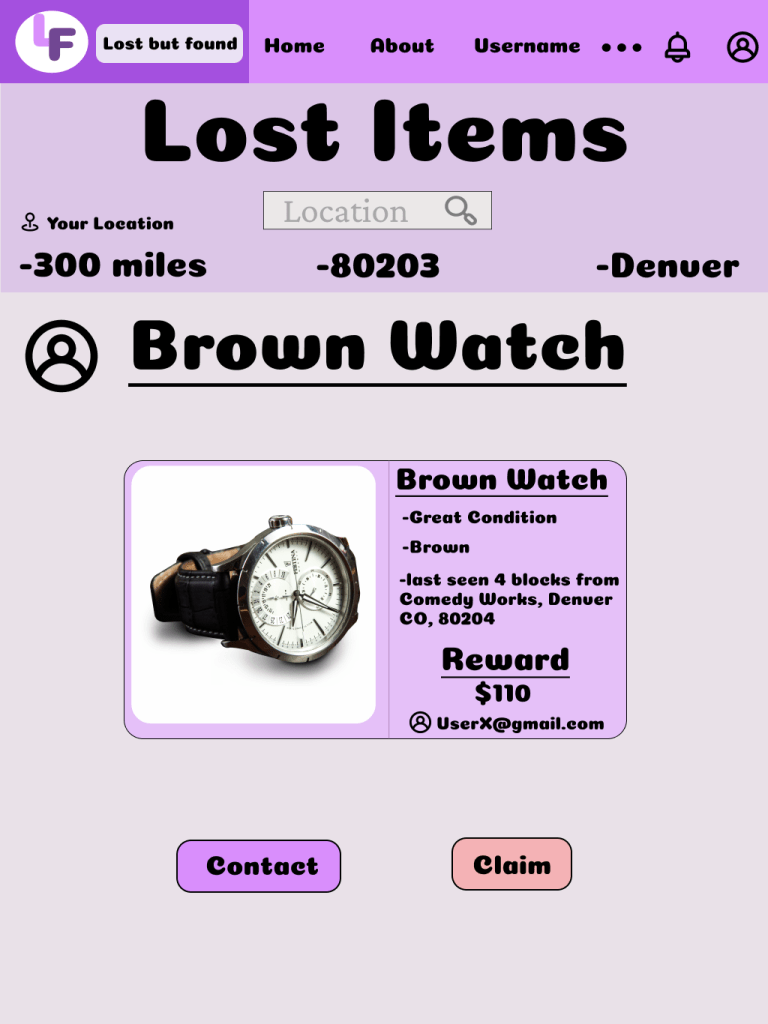
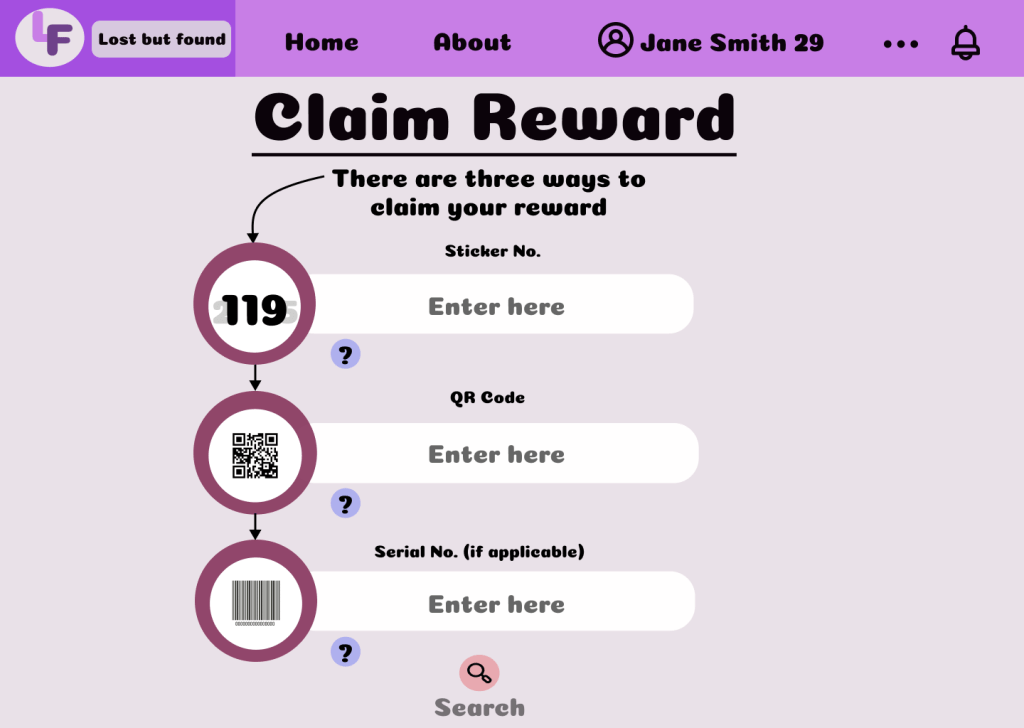
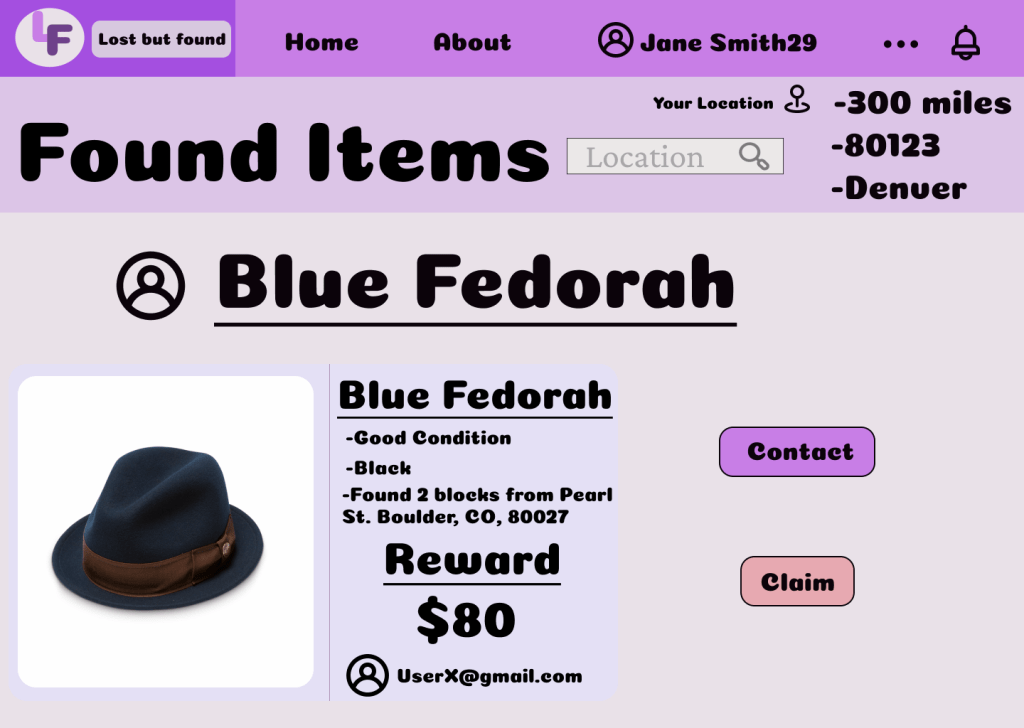
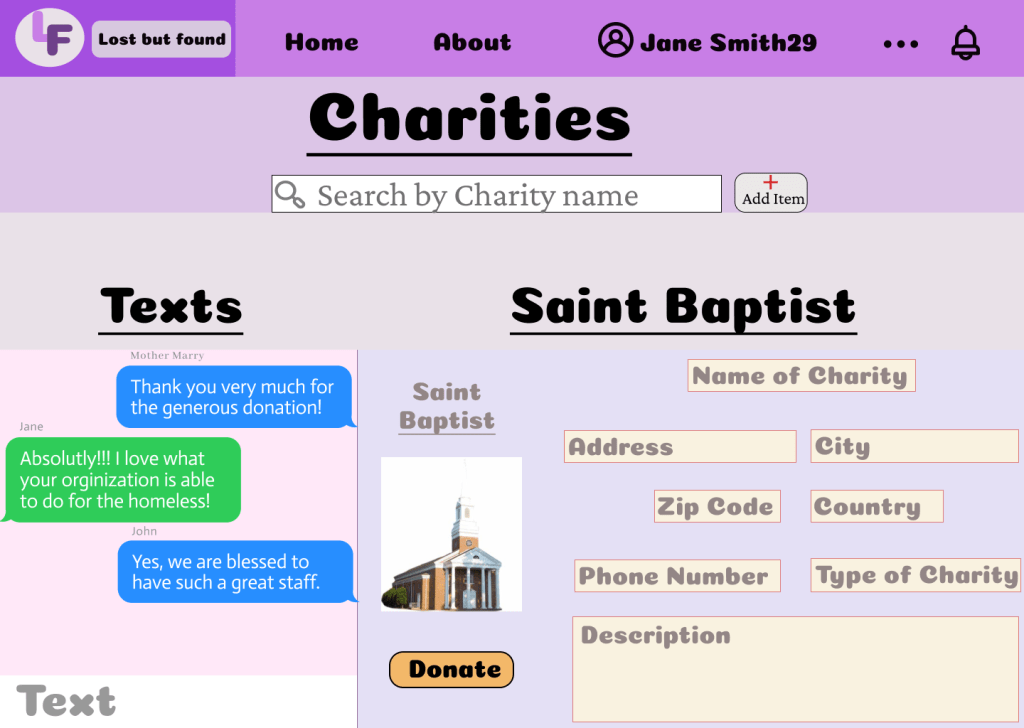
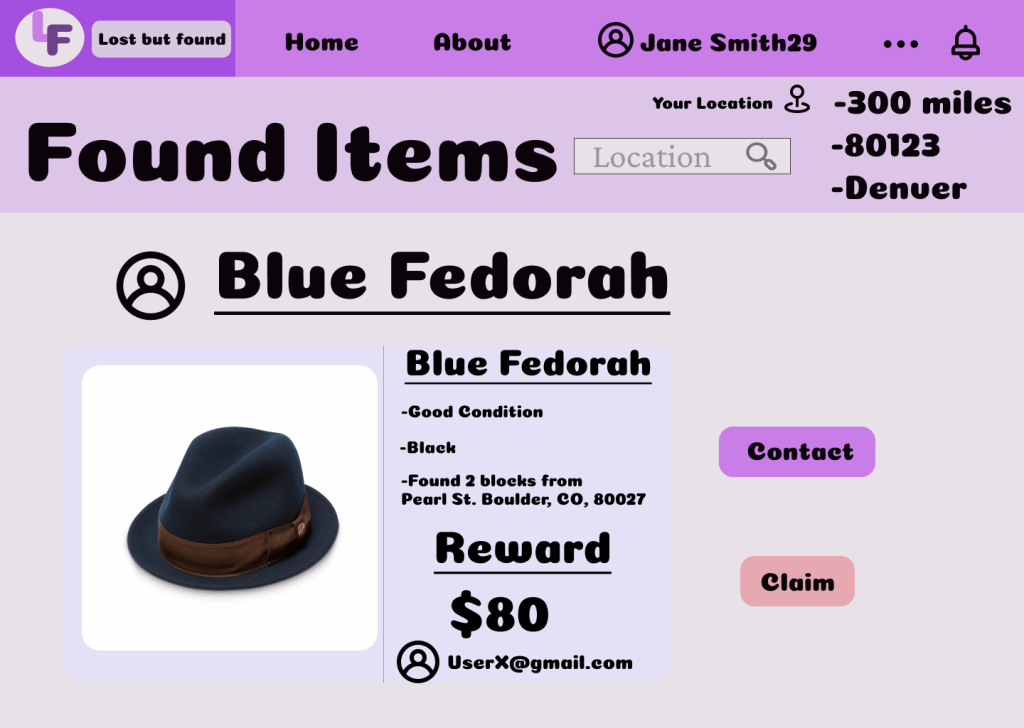
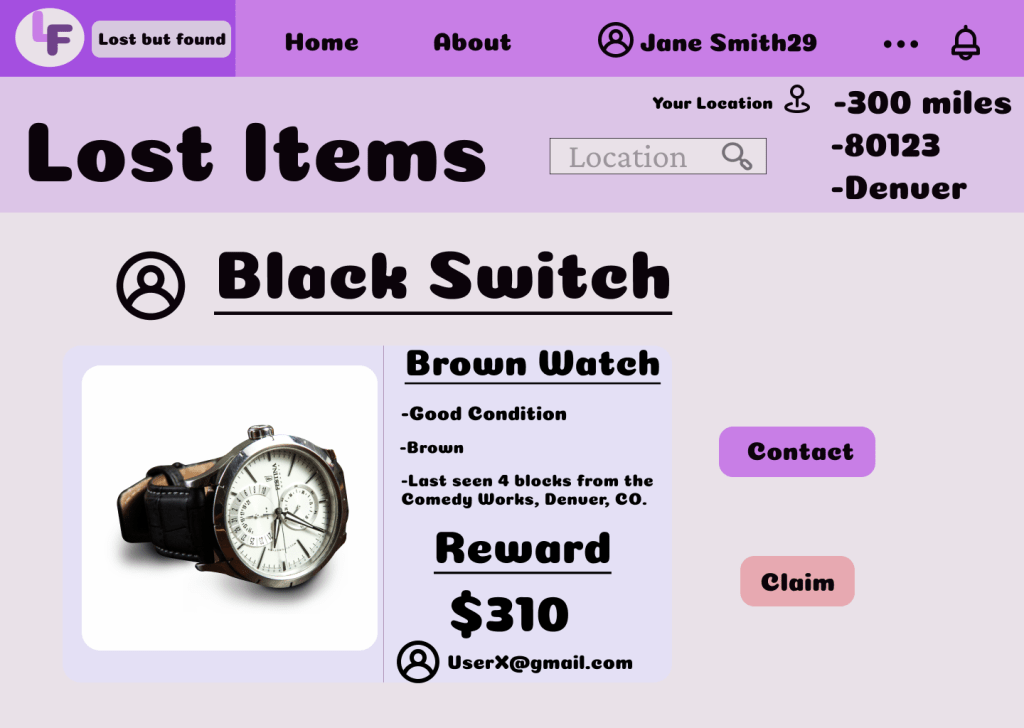
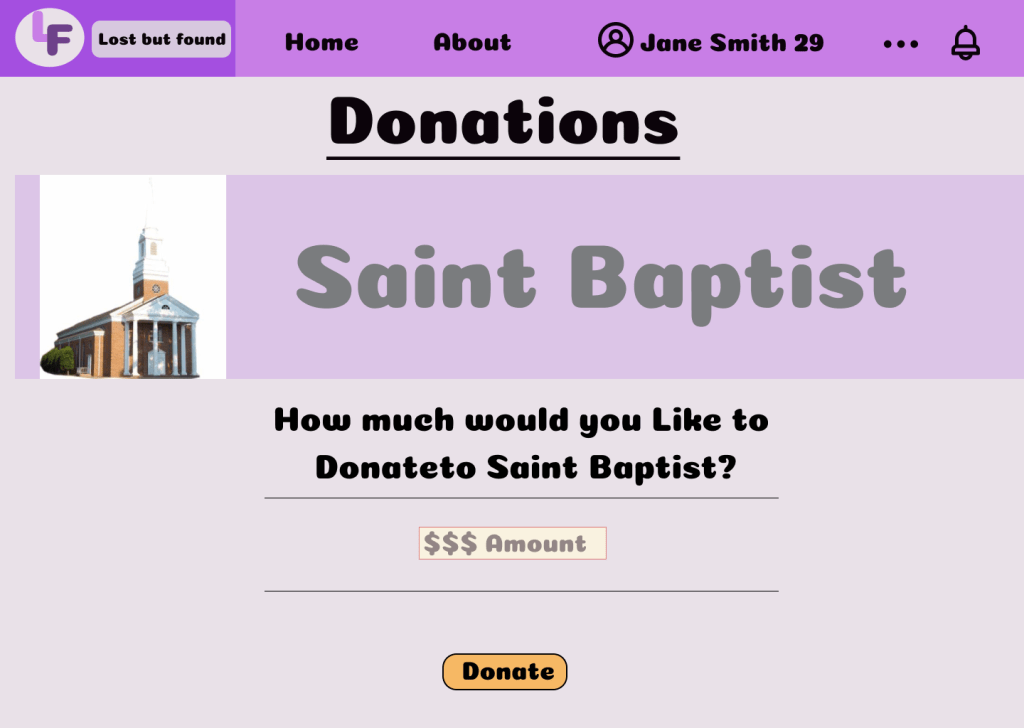
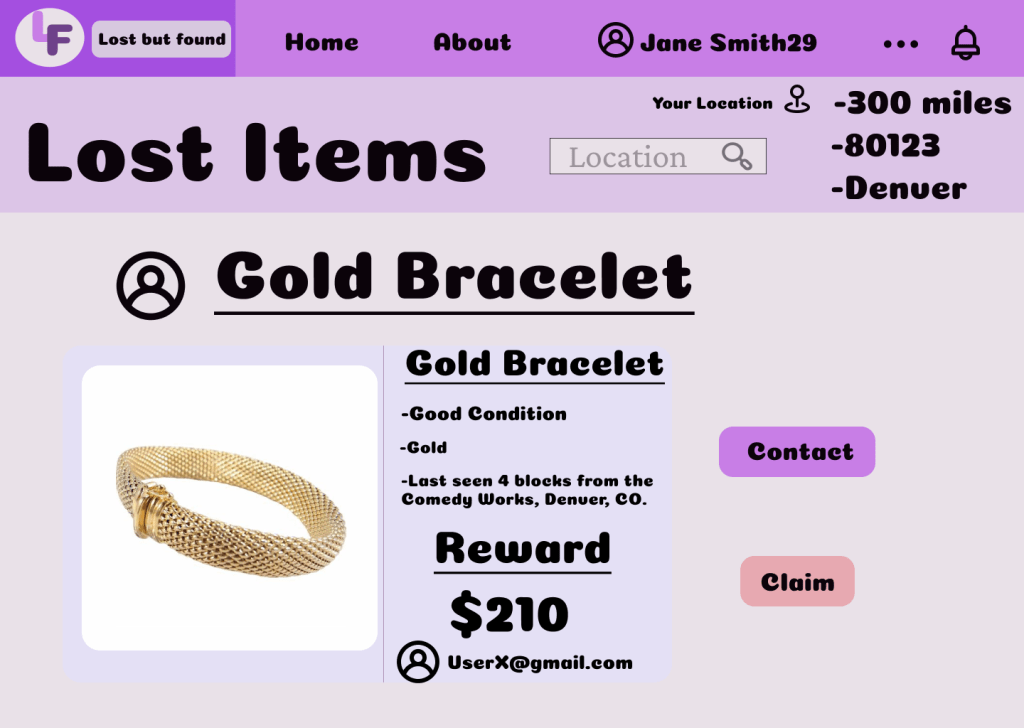
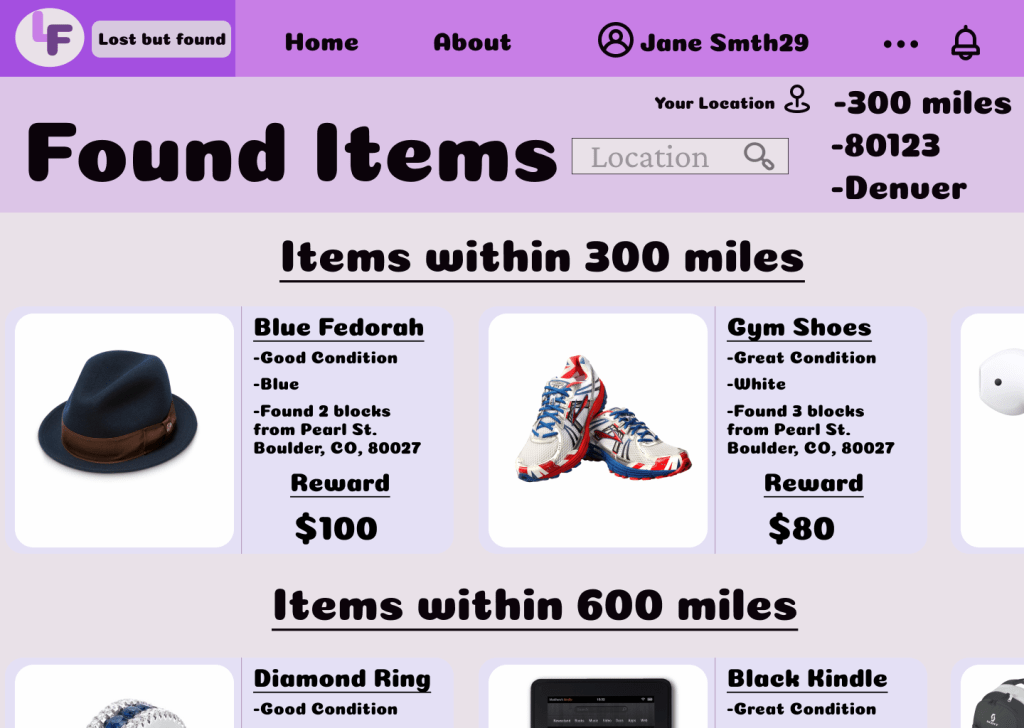
Desktop Designs
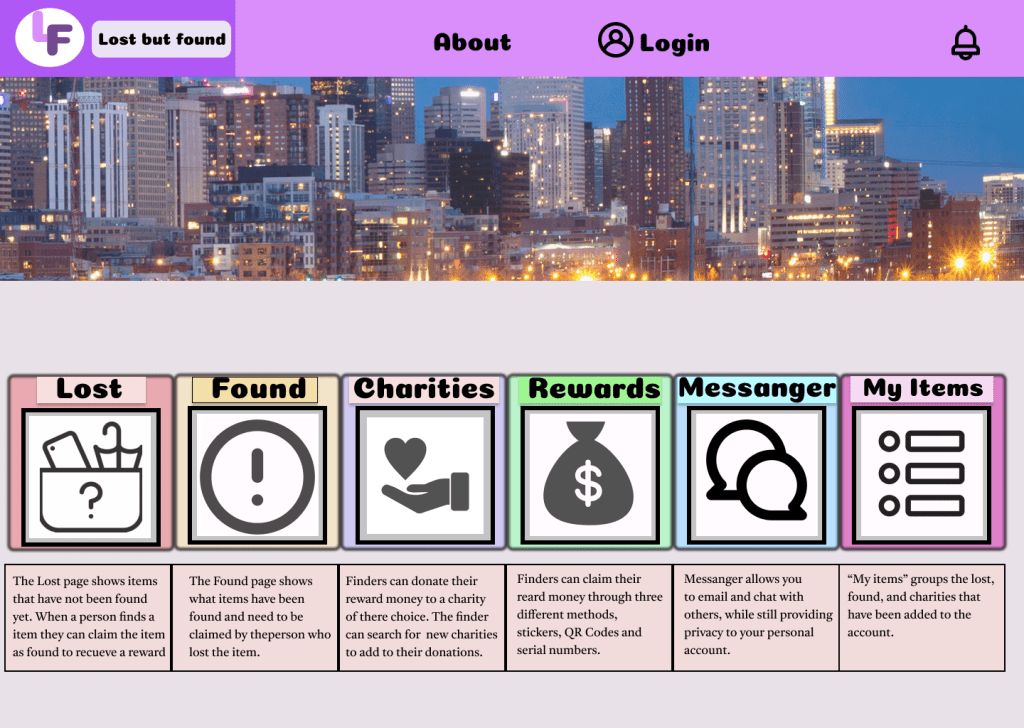
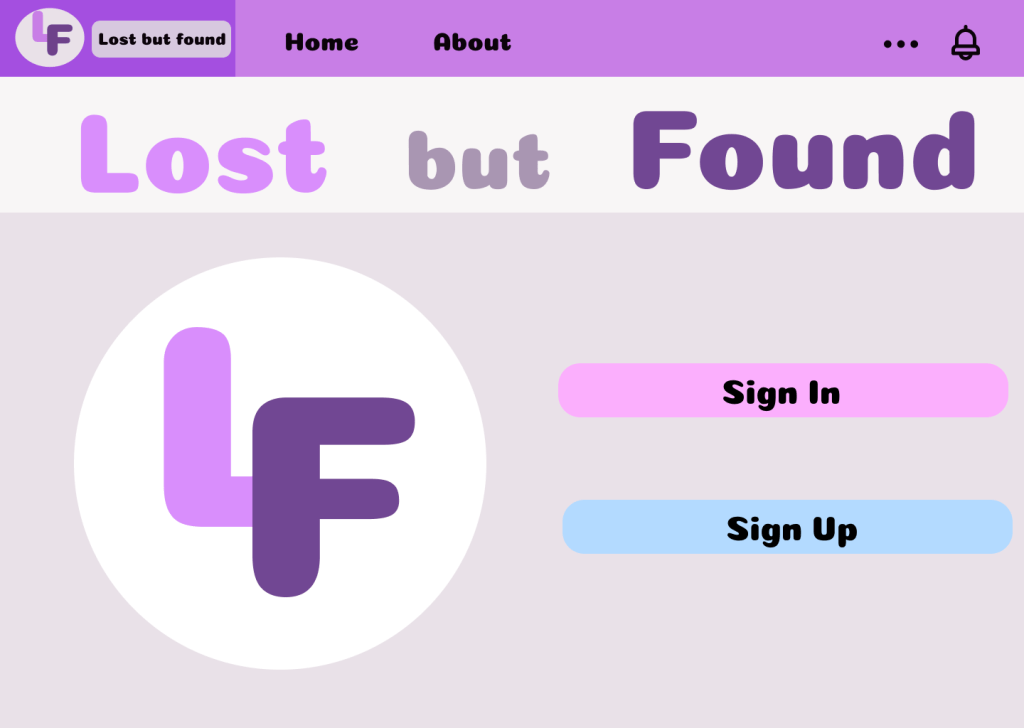







Design Feedback
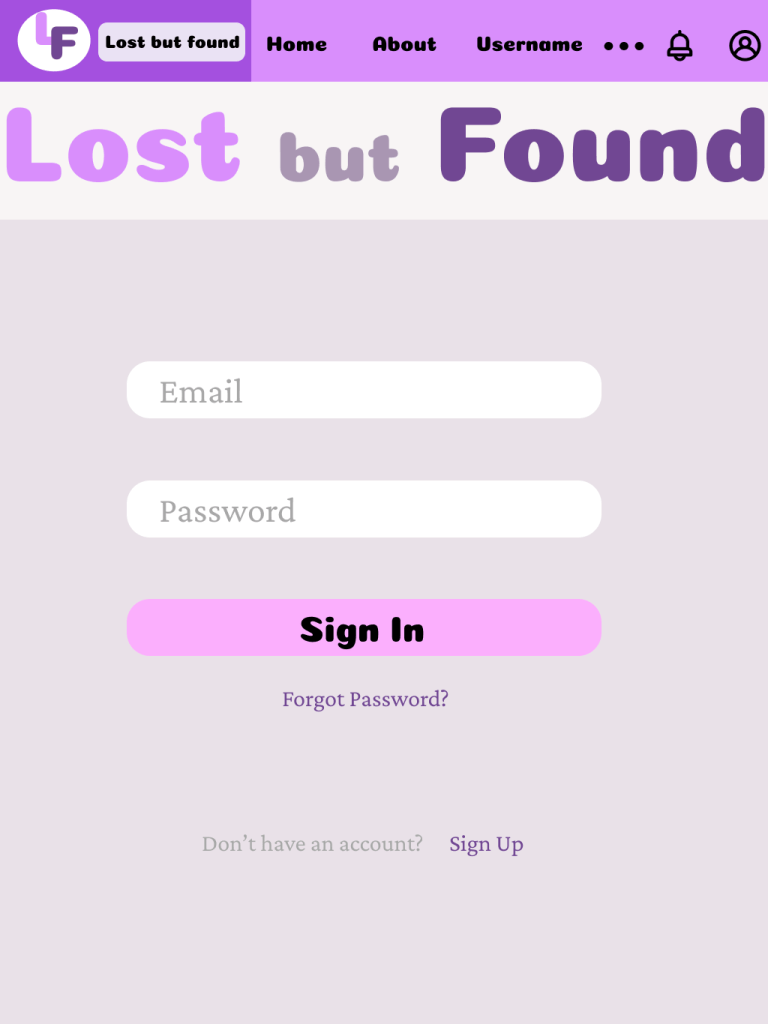
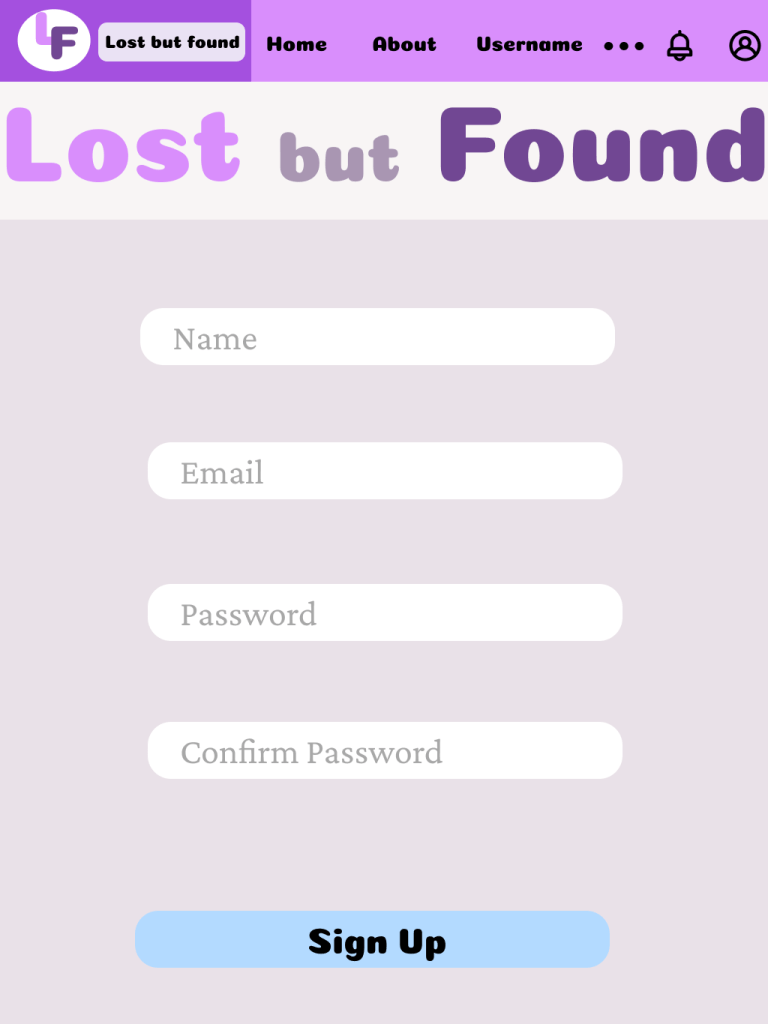
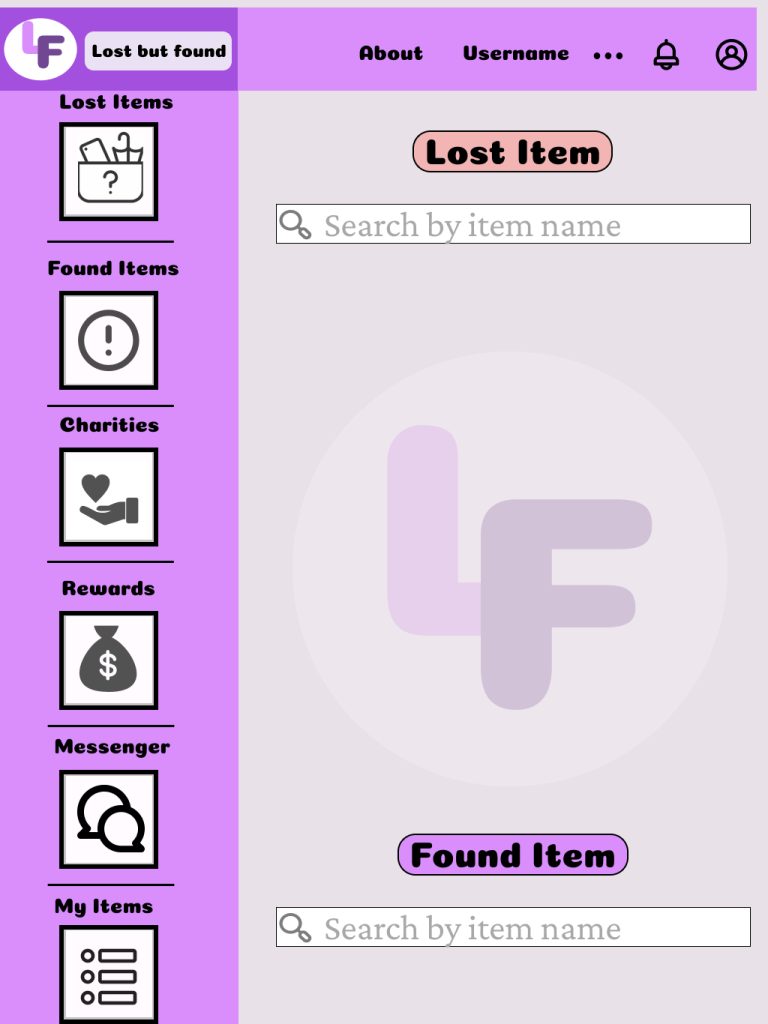
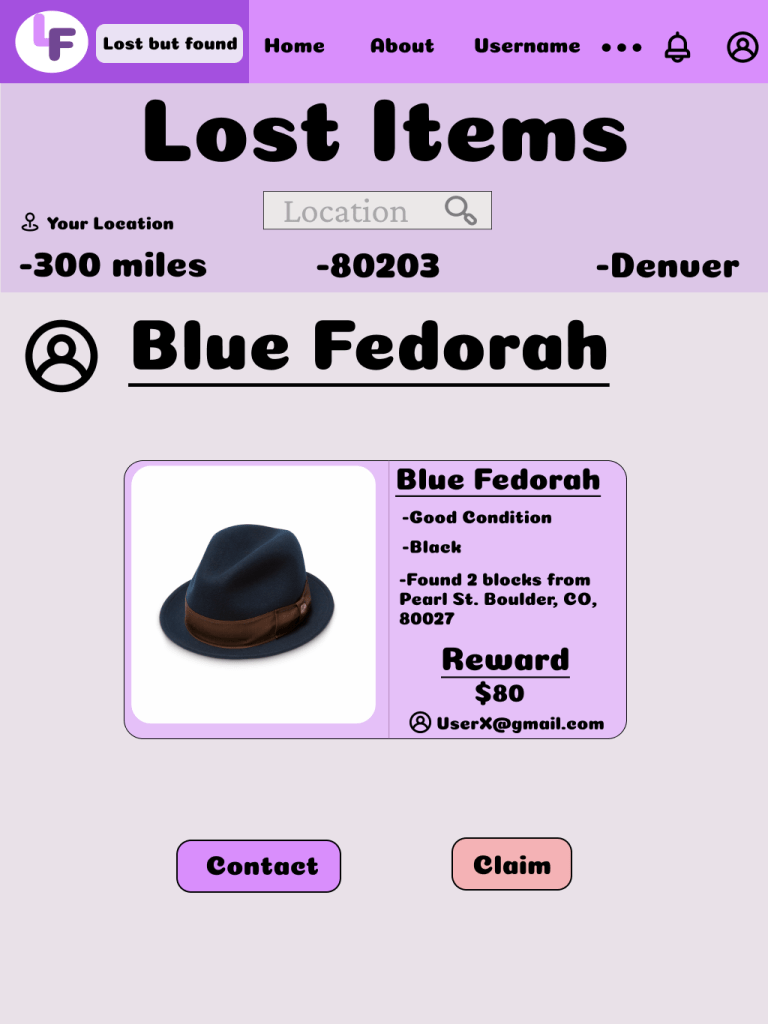
Using participants from the ages of 35-70, I let these participants use the Lost but Free “prototype” to see how they handled the application. I asked the participants to try and navigate the application to: navigate each navigation bar on each device and to find the pages for Found, Lost, Reward, Charity and my Items page.
Most of the participants were able to complete these tasks within 4 minutes and submit the final forum. The Participants all commented they understood what the icons meant on the desktop version due to the fact that the instructions were in text but were a little confused on the mobile and tablet versions because the instructions were not as clear. The participants felt that the app kept a similar image throughout all the devices, but I got feedback that some of the buttons felt out of placed across platforms
from this research I was able to make another page “my items” that groups the items all in one page for Found, Lost and Charities. I redesigned the buttons on the mobile and tablet versions so that they would look the same across all three platforms. After a second walkthrough with the same participants, they were able to navigate the app in a quicker and faster way.
Prototype Walkthrough
Sources and Citations
John. (2021, November 2). Virtual lost and found. Computer Science Zone. Retrieved January 29, 2022, from https://www.computersciencezone.org/virtual-lost-found/ – :~:text=The average person surveyed lost,153.3 days) in a lifetime.
Shaw, J. (2016, September 12). Why do we forget? Scientific American Blog Network. Retrieved January 29, 2022, from https://blogs.scientificamerican.com/mind-guest-blog/why-do-we-forget/ – :~:text=Why we forget seems to,the way you wrote it.
RTD. (2022, January 29.). Lost and found. RTD., from https://www.rtd-denver.com/rider-info/lost-and-found – :~:text=All found items that are,sent to Downtown Boulder Station.
Links to Figma
https://www.figma.com/file/r11cQTNcoR6chlOWQnfCh2/Lost-but-Found-Desktop?node-id=0%3A1
https://www.figma.com/file/pX89bMXvzWTtlGPTb3sKmO/Lost-But-Found-Tablet?node-id=107%3A3053
https://www.figma.com/file/hVUalkfiaJhYFZgS2N2D6E/Lost-But-Found-Mobile?node-id=0%3A1
 Alex Lind